🎓 Your Journey Starts Here

Registration is FREE — no cost to sign up

✅ Get a FREE consultation with Mr. H to assess your level

💰 Pay only for personalized coaching sessions & full Portal access

🎙️
✨ Meet Nell — Your FREE AI Speaking Coach ✨
Practice English conversation anytime • Get instant feedback • IELTS/TOEFL/Daily topics
💡 How to use: Click the 🎙️ microphone icon on the LEFT side of your screen → Tap the mic button → Speak naturally → Nell replies instantly! (Typing also works)
🎤 Start Speaking FREE →

The Accent Trap: Why You Still Sound 'Foreign'

  • You think you're saying 'think'... but it comes out as 'sink' (/θ/ vs /s/)
  • You say 'very' correctly... but 'berry' and 'very' sound identical (/v/ vs /b/)
  • You know the word 'world'... but your tongue can't make the /ɜːrl/ sound
  • You stress the wrong syllable... and 'record' (noun) becomes 'record' (verb)
Here's the truth: Pronunciation problems aren't random. They come from specific sound substitutions your native language trained you to make. I identify YOUR patterns and fix them at the source — with tongue position, airflow, and muscle memory.

Why Apps Can't Fix Your Accent

0
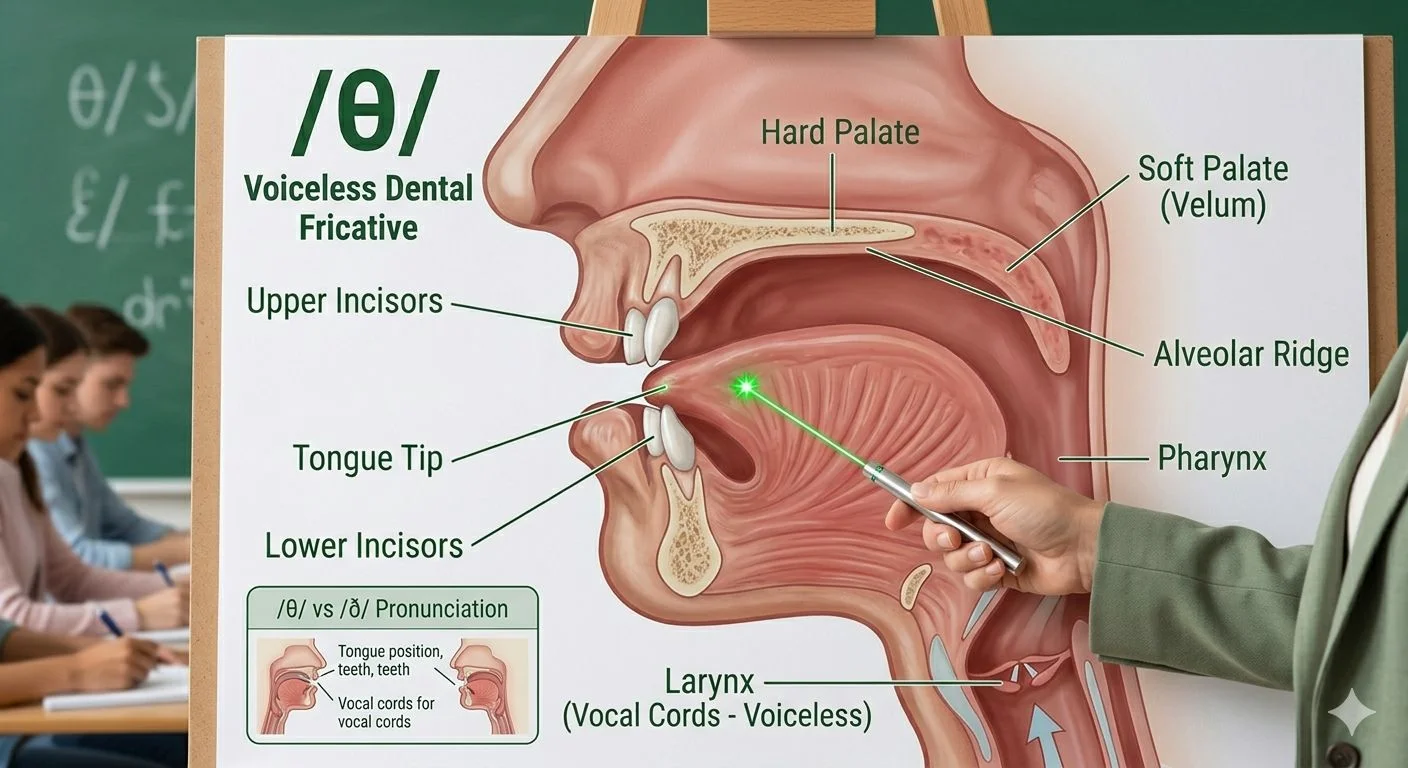
apps can see your tongue position
0
apps give you real-time feedback on YOUR specific errors
100%
of my students improve clarity within 3 sessions

I watch you speak. I hear what you're actually producing. I show you where your tongue needs to go. That's the difference between guessing and knowing. I don't just tell you the sound — I teach you how to make it.

Get Your Free Pronunciation Assessment

Vowel Sounds — The Heart of Your Accent

12 Monophthongs + 8 Diphthongs

English has 20 vowel sounds — but only 5 vowel letters. That's why spelling won't help you pronounce. You need to hear the difference AND feel it in your mouth.

Most Common Vowel Problem:
Confusing /iː/ (sheep) with /ɪ/ (ship). 'I want to live' becomes 'I want to leave' — completely different meanings. The difference is TONGUE TENSION and LENGTH.
Coach's Fix: Smile for /iː/ (sheep). Relax your tongue for /ɪ/ (ship). Hold /iː/ twice as long as /ɪ/. In one session, you'll hear and feel the difference.
/iː/
see, sheep, leave
Tongue high, front; lips spread; LONG
/ɪ/
sit, ship, live
Tongue slightly lower; relaxed; SHORT
/e/
bed, said, head
Tongue mid-front; jaw open
/æ/
cat, man, bad
Mouth wide; tongue low; jaw DROPS
/uː/
too, food, blue
Lips rounded; tongue back; LONG
/ʊ/
put, book, good
Lips loosely rounded; SHORT
/ʌ/
cup, love, money
Tongue central; relaxed; like a quick 'uh'
/ɜː/
bird, first, learn
Tongue mid-central; lips neutral; LONG

Consonant Sounds — Where Most Learners Get Stuck

24 Consonants

Some consonant sounds don't exist in your native language. Your brain doesn't know how to make them — yet. Here's where we focus.

Top 3 Consonant Problems Worldwide:
/θ/ and /ð/ ('think' and 'this') — replaced with /t/, /d/, /s/, or /z/. /r/ and /l/ — confused, especially at ends of words. /v/ and /w/ — 'very' becomes 'berry' or 'wery.'
Coach's Fix for /θ/ and /ð/: Stick your tongue tip OUT between your teeth. Blow air. For /ð/, add your voice (vibration in throat). This feels strange at first. That's how you know you're doing it right.
/θ/
think, thank, bath
Tongue BETWEEN teeth; AIR only
/ð/
this, that, brother
Tongue BETWEEN teeth; WITH voice
/r/
red, right, sorry
Tongue CURLED back; lips rounded; NO tongue tip contact
/l/
light, like, feel
Tongue tip touches roof; air flows AROUND sides
/v/
very, voice, live
Teeth touch bottom lip; buzz (voiced)
/w/
we, water, quick
Lips ROUNDED; tongue back; NO teeth-lip contact

Minimal Pairs — Train Your Ear AND Your Mouth

Critical Practice

Minimal pairs are words that differ by only ONE sound. If you can't HEAR the difference, you can't PRODUCE the difference. Click each pair to hear both words — then practice saying them.

/ɪ/ vs /iː/ — "ship" vs "sheep"
/θ/ vs /s/ — "think" vs "sink"
/ð/ vs /z/ — "then" vs "zen"
/v/ vs /b/ — "very" vs "berry"
/l/ vs /r/ — "light" vs "right"
/w/ vs /v/ — "west" vs "vest"
How to practice: Listen first. Then repeat each word slowly. Record yourself. Compare. I do this WITH my students in real time — giving immediate feedback on what you're actually producing.

British vs American Pronunciation — What's Your Goal?

Choose Your Target

Neither is 'better.' But mixing them sounds inconsistent. Decide which accent you want to aim for — I can train both.

Word🇬🇧 British (RP)🇺🇸 American (GA)What's Happening
water/ˈwɔːtə/ — crisp "t"/ˈwɑːdər/ — flapped "t"Americans turn 't' into a quick 'd' sound
dance/dɑːns/ — long "ah"/dæns/ — short "a"Different vowel in 'bath/trap' words
better/ˈbetə/ — crisp "t"/ˈbedər/ — flapped "t" + final "r"American 'r' at the end; flapped 't' in middle
tomato/təˈmɑːtəʊ//təˈmeɪdoʊ/Different vowel in second syllable
schedule/ˈʃedjuːl/ — "sh" sound/ˈskedʒuːl/ — "sk" soundCompletely different first consonant
Coach's Note: Mixing British and American sounds (e.g., 'water' with a British 't' but American 'r') sounds confusing to native speakers. I'll help you pick ONE target accent and train it consistently.

Connected Speech — Why Native Speakers Sound 'Fast'

Advanced

Native speakers don't say 'I am going to go to the store.' They say 'I'm gonna go t'the store.' Sounds disappear. Words blend. That's connected speech.

Why You Can't Understand Fast English:
You're listening for dictionary pronunciation. But native speakers use reduced forms: 'going to' → 'gonna,' 'want to' → 'wanna,' 'did you' → 'didja,' 'what do you' → 'whaddaya.'
Coach's Fix: We'll practice connected speech patterns systematically. You'll learn NOT just to understand them — but to USE them naturally. That's what makes you sound fluent, not robotic.
"going to" → "gonna"
"I'm gonna call you tomorrow."
"want to" → "wanna"
"I wanna learn English."
"did you" → "didja"
"Didja see the movie?"
"what do you" → "whaddaya"
"Whaddaya think?"
"give me" → "gimme"
"Gimme a minute."
"let me" → "lemme"
"Lemme explain."
📖
✨ FREE English Dictionary ✨
500,000+ words • Audio pronunciation • Examples • Synonyms & Antonyms
💡 Click the blue book icon on the RIGHT side of your screen → Type any word → Listen & learn!
🔍 Try it now →

Try It Yourself — Then Get Real Feedback

Click any sound card above to hear the correct pronunciation. But knowing what it SHOULD sound like is only half the solution.

Do YOU sound like that? A coach can tell you in 2 seconds. An app cannot.

Let Me Listen to Your Pronunciation

Stop Being Asked to Repeat Yourself

You deserve to speak clearly and confidently. I've been fixing pronunciation for 25+ years — and I can help you.

What you get in pronunciation coaching:

Accent analysis — identify YOUR specific problem sounds
Tongue position training — exact placement for each sound
Minimal pair drills — with real-time correction
Connected speech practice — sound natural, not robotic
Stress & intonation — the music of English
Accent choice — British OR American (your choice)
Pronunciation coaching session

Founder & Coach

Mohamad S. Haidari

Call or WhatsApp

(+98) 912 361 7508

(+98) 939 361 7508

Teaching Since

1998

Book Your Free Pronunciation Assessment

I'll listen to you speak for 10 minutes — and give you 3 specific sounds to fix immediately. Free, no obligation.